Executive Summary
Schedulicity had historically offered only monthly subscriptions, providing flexibility but no incentive for long-term commitment. In one quarter, I led the end-to-end design of its first annual subscription experience across plan selection, upgrades, billing, renewals, and account management.
The new offering generated $125K in annual subscription revenue within seven months and achieved 10% adoption among newly acquired customers.
Outcomes at a Glance
- Generated $125K in annual subscription revenue within seven months
- Achieved 10% adoption among newly acquired customers
- Introduced Schedulicity’s first annual subscription offering
- Created a scalable framework for future billing features
The Opportunity
Monthly subscriptions gave new customers flexibility but did not reward those who stayed long term. They also limited the business’s ability to improve retention and create more predictable recurring revenue.
Annual subscriptions offered customers approximately 16% savings in exchange for a longer commitment. What appeared to be a pricing change quickly became a broader systems challenge affecting nearly every stage of the subscription lifecycle.
My Role
I led the end-to-end product design strategy, from discovery and lifecycle mapping through high-fidelity design, engineering collaboration, and launch validation.
I partnered with Product Management, Engineering, QA, Customer Experience, Data Analytics, Marketing, and leadership to align business goals with customer needs and deliver the experience incrementally.
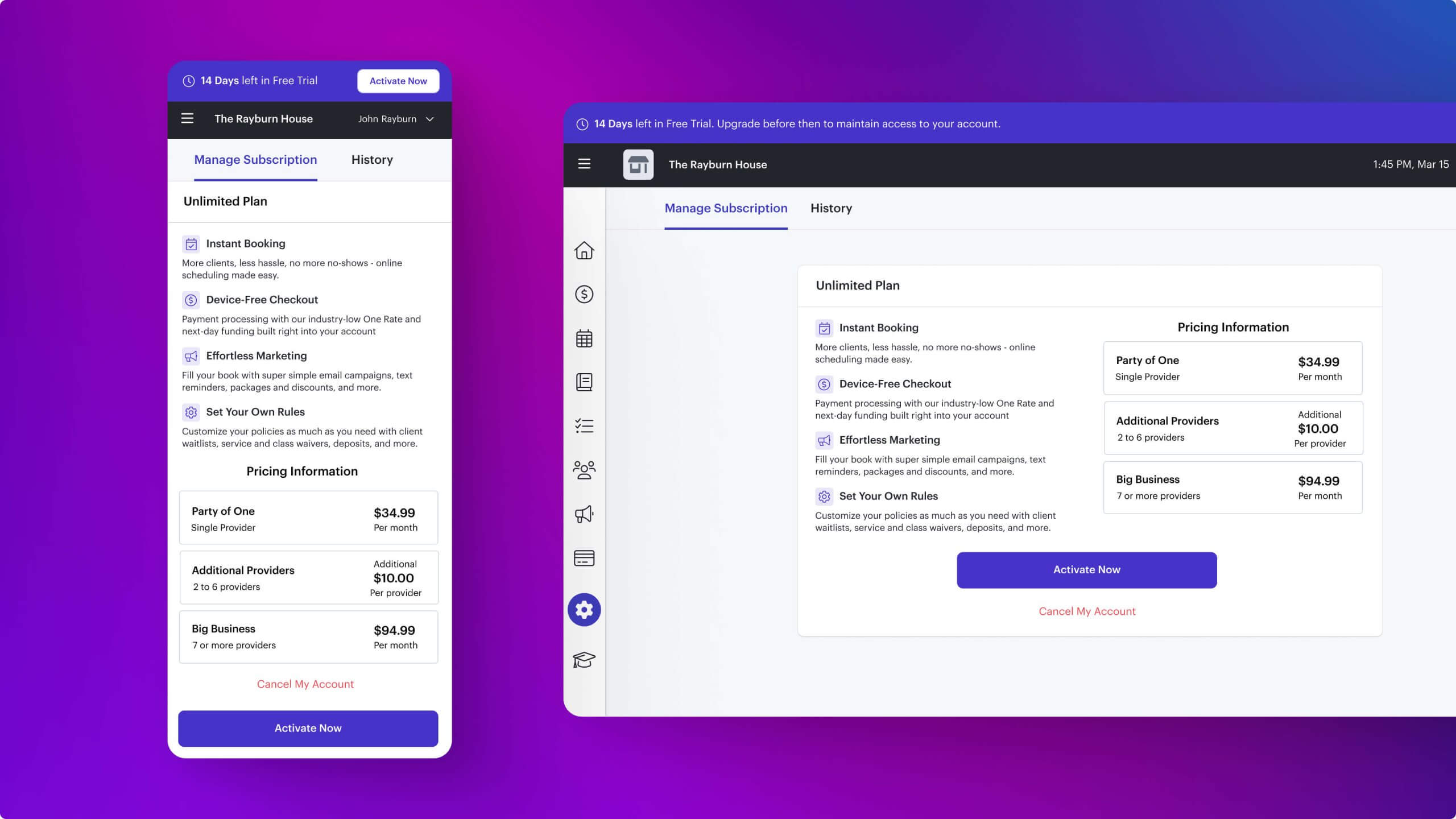
Before: Customers were limited to a monthly plan with no long-term incentive, unclear upgrade paths, and limited pricing transparency.
The Challenge
Annual subscriptions required customers to make a larger, non-refundable upfront payment. They needed to understand the total cost, annual savings, renewal timing, provider-based pricing, and cancellation terms before committing.
The experience also had to support new customers, monthly subscribers, returning customers, and businesses changing their provider count.
The challenge was to encourage long-term commitment without sacrificing transparency, flexibility, or trust.
Discovery
I combined user interviews, behavioral analytics, Customer Experience feedback, Intercom conversations, and competitive analysis to understand when and why customers would choose an annual plan.
Data showed customers were most likely to upgrade after using Schedulicity for two to three months. Interviews reinforced that they wanted to experience the platform’s value before making a yearly commitment.
Support feedback also revealed recurring confusion around charges, credits, and subscription changes.
Key Insights
Customers wanted flexibility while learning the platform and became more receptive to annual billing after experiencing its value.
The discount alone was not enough. Customers also needed confidence in pricing, renewals, cancellation terms, and refund policies.
Annual billing could not be designed as a standalone checkout option. Activation, upgrades, billing history, provider changes, cancellation, reactivation, and renewals were one connected system.
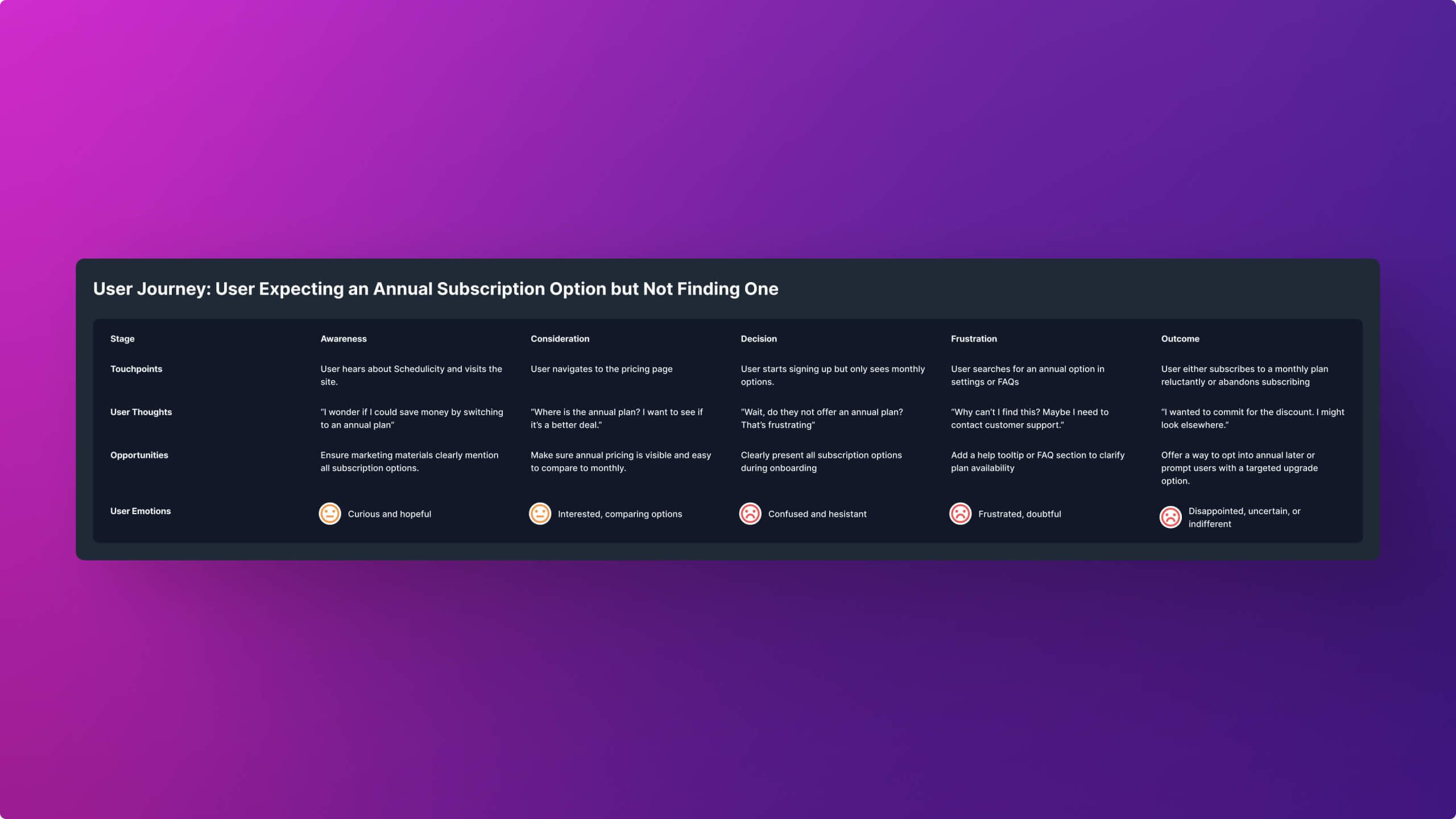
Mapping the existing journey revealed missing upgrade moments and showed that customers needed time to experience value before making a long-term commitment.
Product Strategy
The original request was to introduce an annual pricing option. Discovery revealed a larger opportunity: design a scalable subscription management system that could support the entire customer lifecycle.
Partnering with Product Management, we aligned on three strategic goals:
- Encourage long-term commitment once customers had experienced the platform’s value
- Improve recurring revenue predictability through annual subscriptions
- Maintain customer trust through transparent billing, pricing, and subscription policies
This shifted the initiative from a pricing feature into a foundational product capability.
Key Trade-Offs
Several decisions shaped the experience before a single interface was finalized.
- Transparency over conversion: We surfaced refund policies and renewal terms before purchase, accepting slightly more friction to build long-term trust.
- Customer readiness over aggressive upselling: Research showed customers committed after experiencing value, so annual plans appeared throughout the lifecycle instead of only during onboarding.
- Holistic design, incremental delivery: I designed the complete subscription system first while Engineering implemented it in smaller phases.
Mapping the Lifecycle
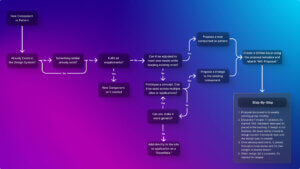
Rather than designing isolated screens, I mapped every state a customer could move through before creating interfaces. This exposed dependencies between activation, upgrades, provider changes, billing, cancellation, renewals, and reactivation early.
Designing the system first reduced inconsistencies before development began and allowed Engineering to implement smaller releases while preserving one cohesive customer experience.
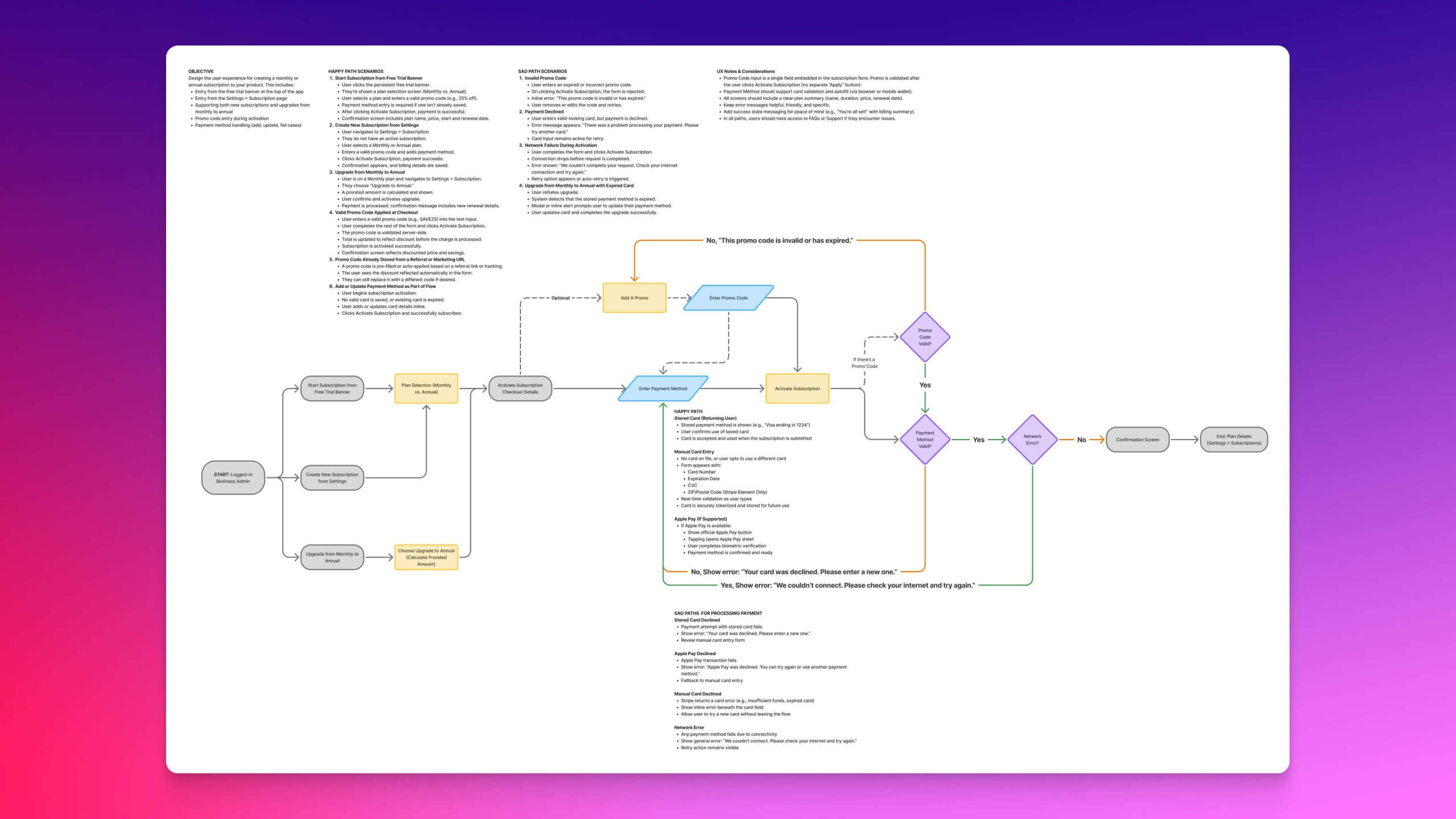
Research identified three moments when customers were most receptive to committing, so the experience introduced annual subscriptions where confidence—not pressure—was highest.
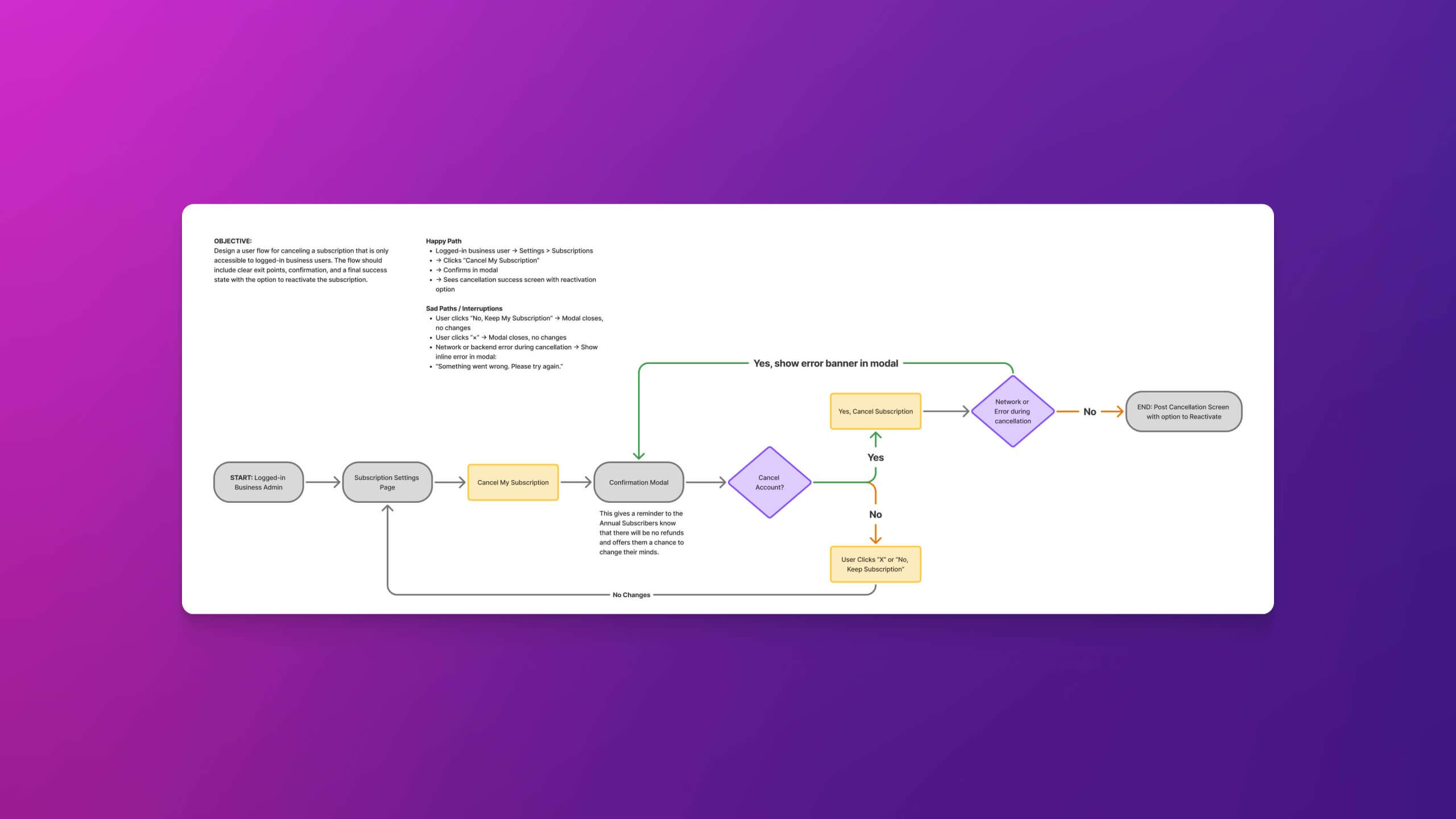
The cancellation journey surfaced commitment terms only when relevant, helping customers understand their options without overwhelming earlier decision points.
Design Principles
Transparency over persuasion: Make pricing, renewal timing, and non-refundable terms clear before purchase.
One connected system: Use consistent patterns across activation, upgrades, billing, cancellation, and renewal.
Reduce cognitive load: Calculate proration, credits, and provider adjustments for customers.
Build long-term trust: Help customers make an informed commitment rather than pressuring them into conversion.
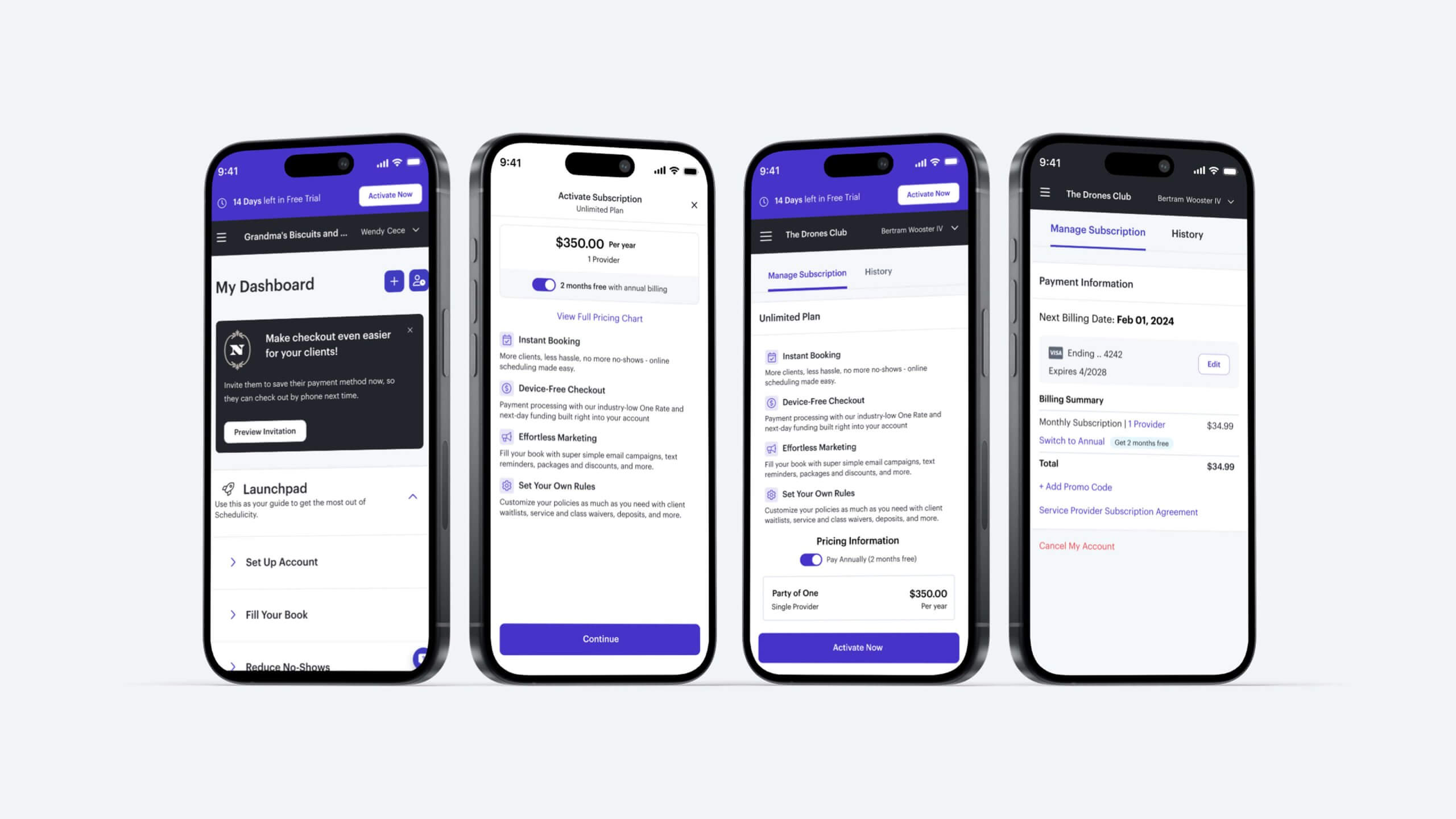
Annual-plan entry points appeared during onboarding, in subscription settings, and after monthly customers had experienced enough value to consider upgrading.
The Solution
I designed a unified subscription experience that introduced annual billing alongside the existing monthly plan.
Customers could compare plans, understand their savings, upgrade with prorated credits, manage provider-based pricing changes, review billing adjustments, and prepare for renewal.
Complex calculations remained behind the interface, while the experience clearly explained what customers would pay, when they would be charged, and how changes affected their subscription.
Building for Trust
Because annual plans required a larger commitment, clarity was essential. I designed:
- Plan comparisons that clearly explained savings and commitment length
- Confirmation steps that surfaced refund and downgrade policies
- Inline alerts and contextual guidance that reduced ambiguity
These patterns helped customers understand the decision before committing and created consistency across the subscription lifecycle.
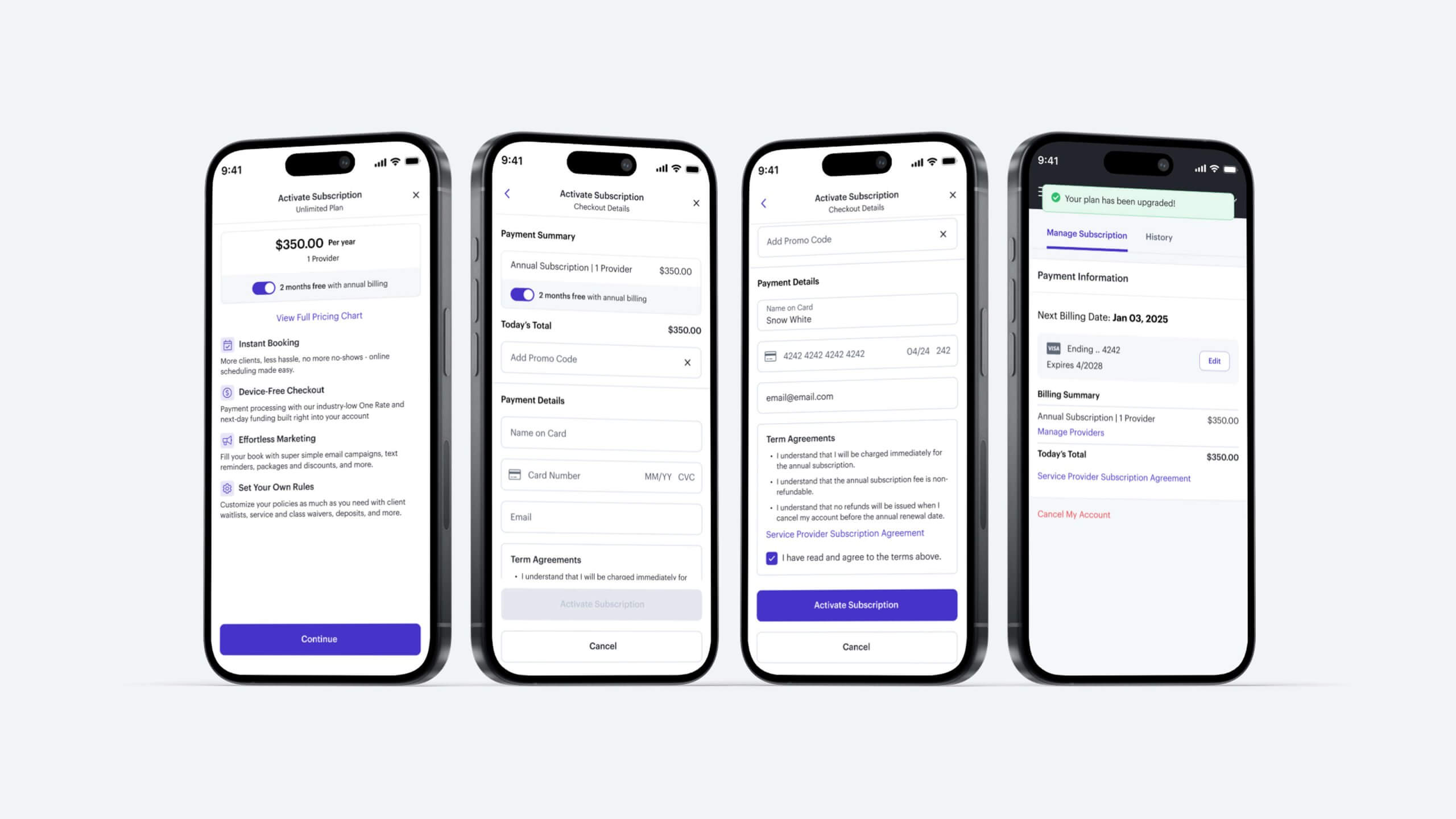
The upgrade flow prioritized trust by making savings, renewal timing, and refund policies visible before payment instead of after purchase.
Plan Selection and Upgrades
New customers could compare monthly and annual options during activation, with pricing updated dynamically based on provider count.
Existing customers could upgrade after experiencing the platform’s value. The system automatically calculated credits and proration, then showed the amount due, annual savings, renewal date, and applicable terms before confirmation.
This removed the burden of interpreting billing calculations while giving customers enough detail to trust the transaction.
Provider-Based Pricing
Schedulicity’s pricing changed based on the number of providers in a business. Adding or removing providers during an annual term could create additional charges or credits.
I designed confirmation experiences that explained why the price changed, the adjustment amount, when it would take effect, and how it affected the current subscription period.
The system handled the calculations while the interface focused on the outcome.
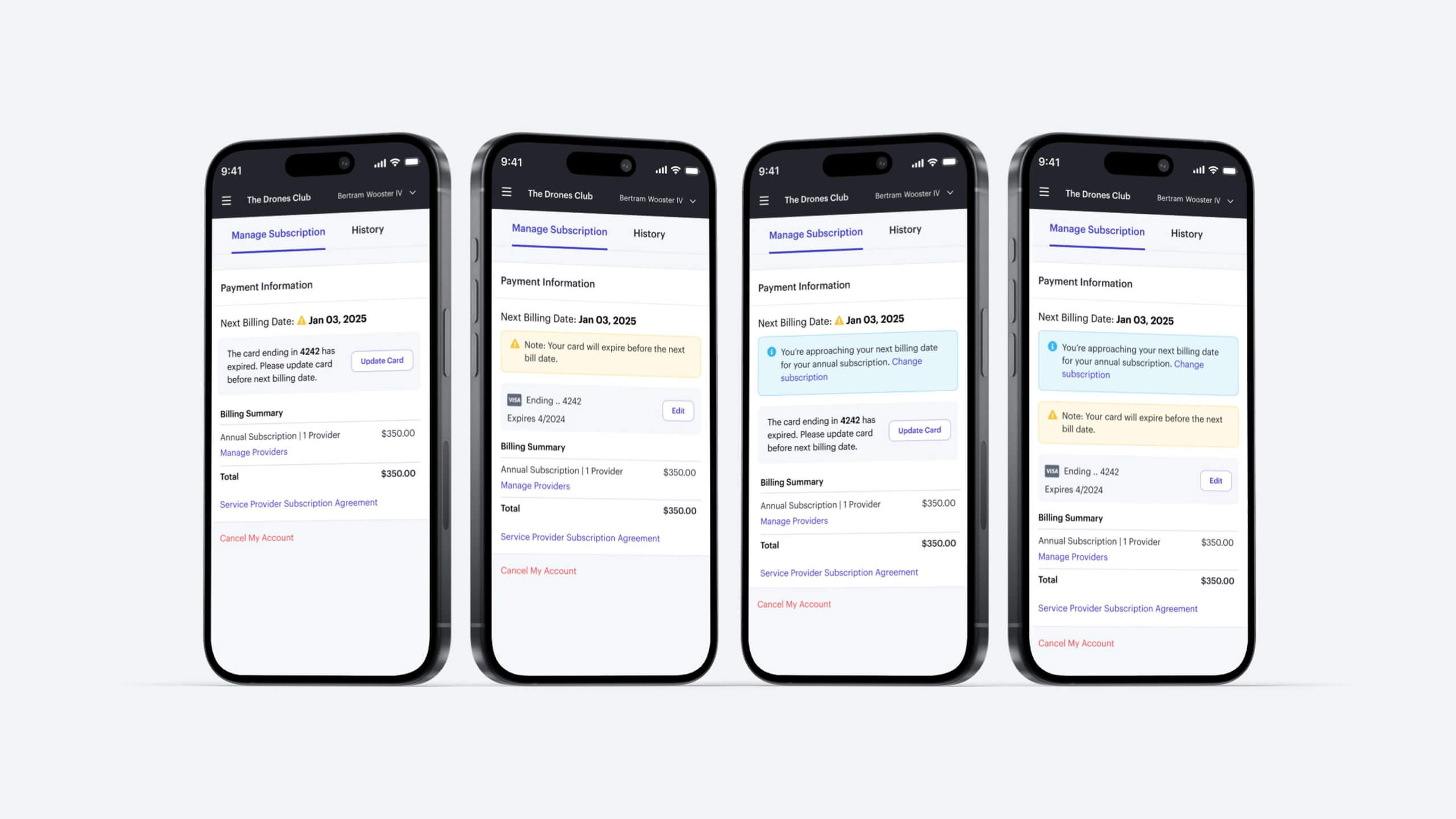
Renewal alerts shifted the experience from a surprise billing event to an informed decision, giving customers time to update payment information or review their plan.
Renewal Management
I treated annual renewal as an experience rather than a single billing event.
Customers received advance notice and could review their renewal date, upcoming payment, provider count, and current plan details.
The experience also explained when customers could return to monthly billing. This reduced the risk of unexpected renewals and gave customers greater control over their subscription.
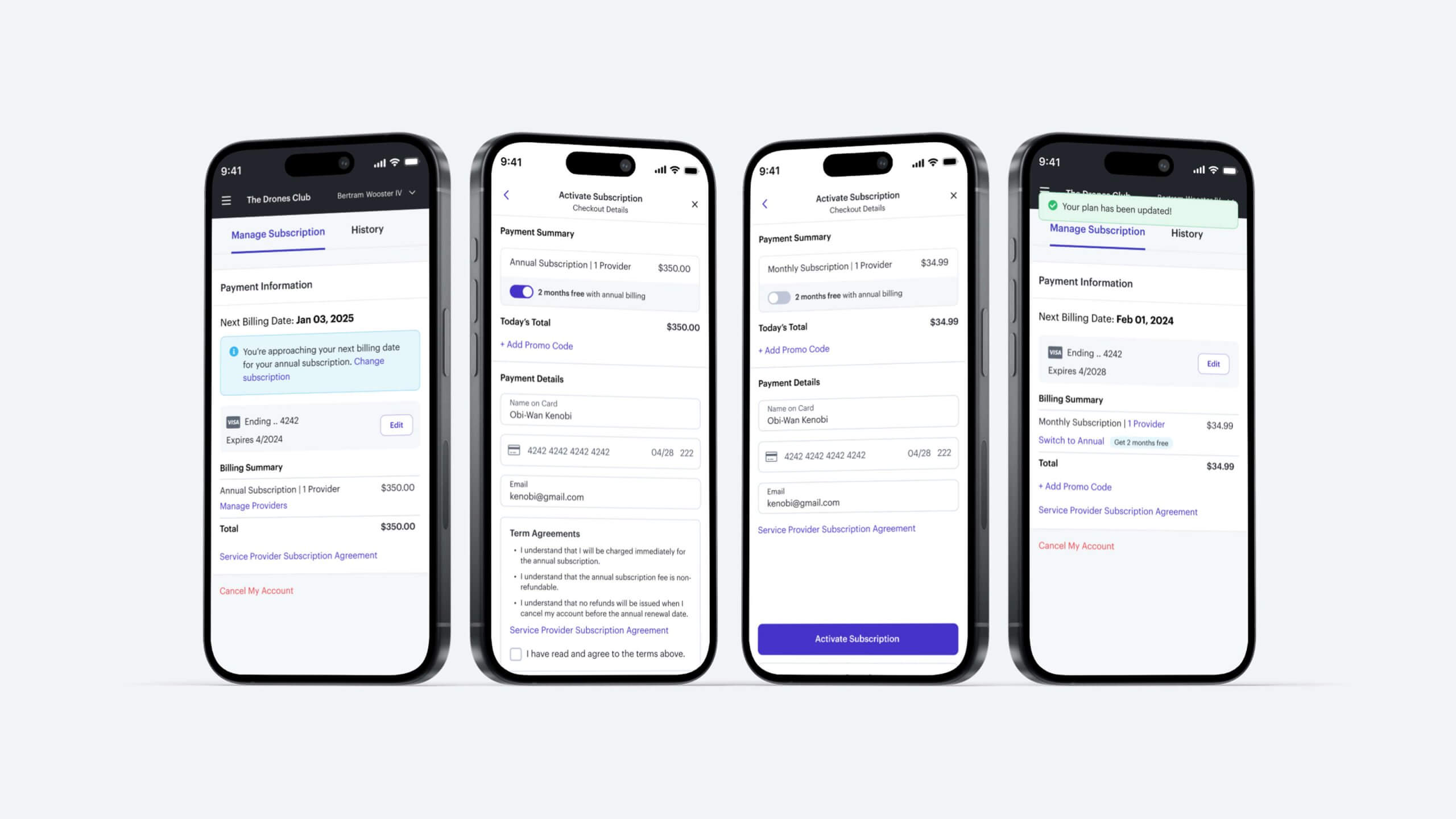
The downgrade flow balanced contractual limits with customer control by making monthly billing available during a clearly defined renewal window.
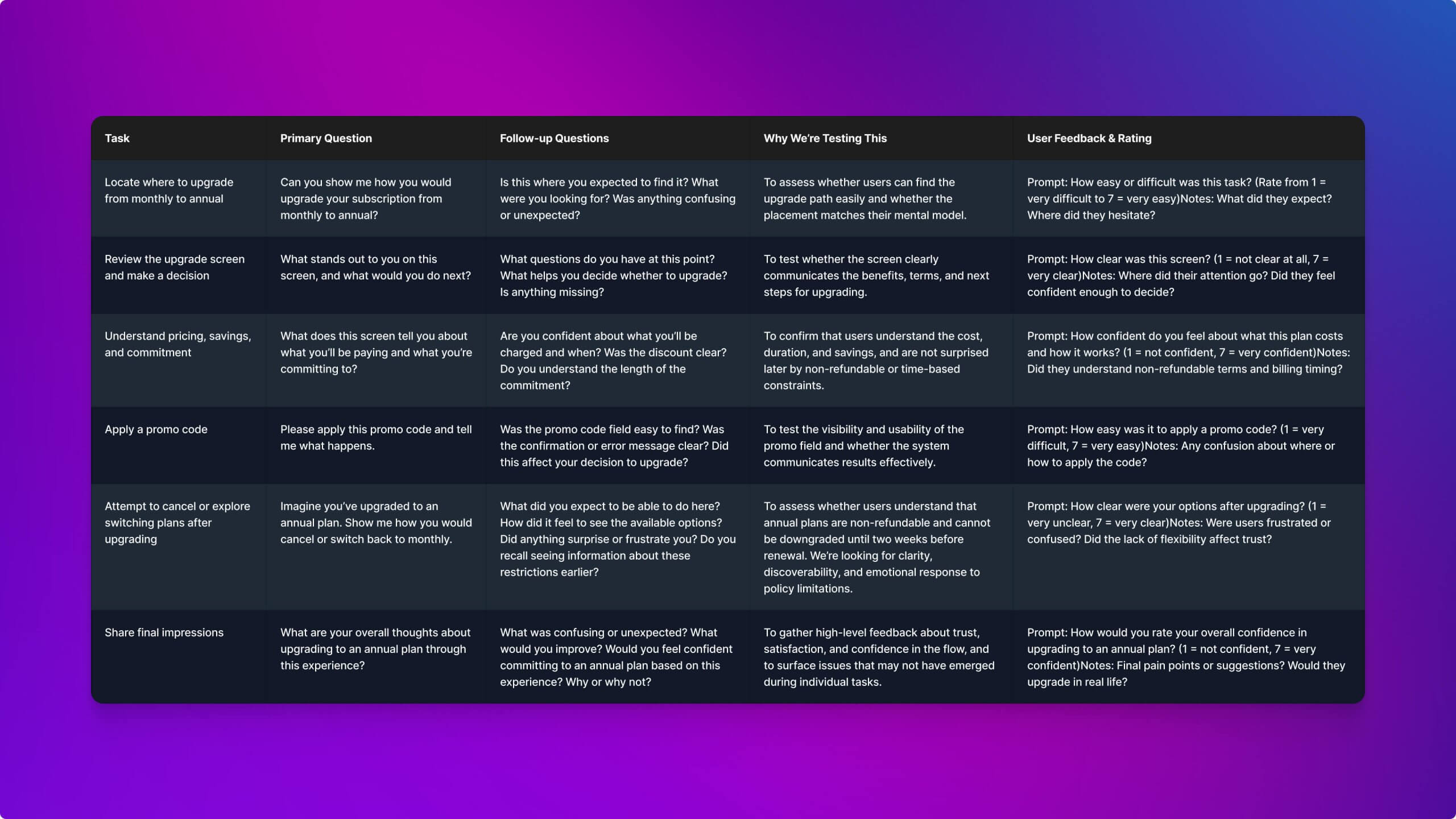
Usability testing focused on confidence as much as completion, verifying that participants understood pricing, policies, and long-term commitment before subscribing.
Validation
We evaluated the experience through usability testing, behavioral analytics, adoption data, revenue performance, and subscription-related support feedback.
Testing focused on whether customers understood the price, savings, payment timing, renewal expectations, and consequences of switching plans.
Post-launch results validated demand, with 10% adoption among newly acquired customers and $125K in annual subscription revenue within seven months.
Impact
The initiative introduced Schedulicity’s first alternative to monthly-only billing and created a new recurring revenue stream.
Within seven months, annual subscriptions generated $125K in revenue and reached 10% adoption, despite initially being limited to newly acquired customers.
The work also established reusable patterns for plan selection, proration, billing history, provider adjustments, subscription transitions, and renewal management.
Prototype Demonstration
After the project, I built an interactive prototype in Figma Make to demonstrate the complete checkout experience. It was not part of the production release.
The prototype helped me explore how AI-assisted tooling could accelerate prototyping, validate edge cases, and communicate a complex subscription journey more clearly within a portfolio case study.
Explore the full checkout flow. Use 4242424242424242 for success, 5431111111111228 for decline, SKYWALKER for a valid promo, and DARTHVADER25 for an invalid one.
Reflection
This project changed how I think about subscription products. What began as a pricing feature became a lifecycle design problem spanning activation, billing, renewals, cancellation, and account management.
Mapping those relationships before designing interfaces created a more cohesive product and reduced implementation risk. It also reinforced that clear pricing, predictable billing, and transparent policies create the confidence required for long-term commitment.